Herculaneum / Pompeii, Italy

Author: Jon-David

After our time in Rome we headed south to the Mt. Vesuvius area. We stayed two nights in Pompeii while we explored the area’s ancient Roman sites.

The first day we visited the Herculaneum archeological site. Herculaneum was a small, wealthy coastal town of ~5,000 people, with many extravagantly decorated houses. Due to its proximity to Mount Vesuvius it was buried 66′ in ash (vs 13-20′ in Pompeii). The added depth and more modern excavation techniques better preserved Herculaneum and retained more carbonized organic material like wood, bread and wicker baskets. If you are in the Naples area and only have a day to explore, I highly recommend visiting Herculaneum over Pompeii.
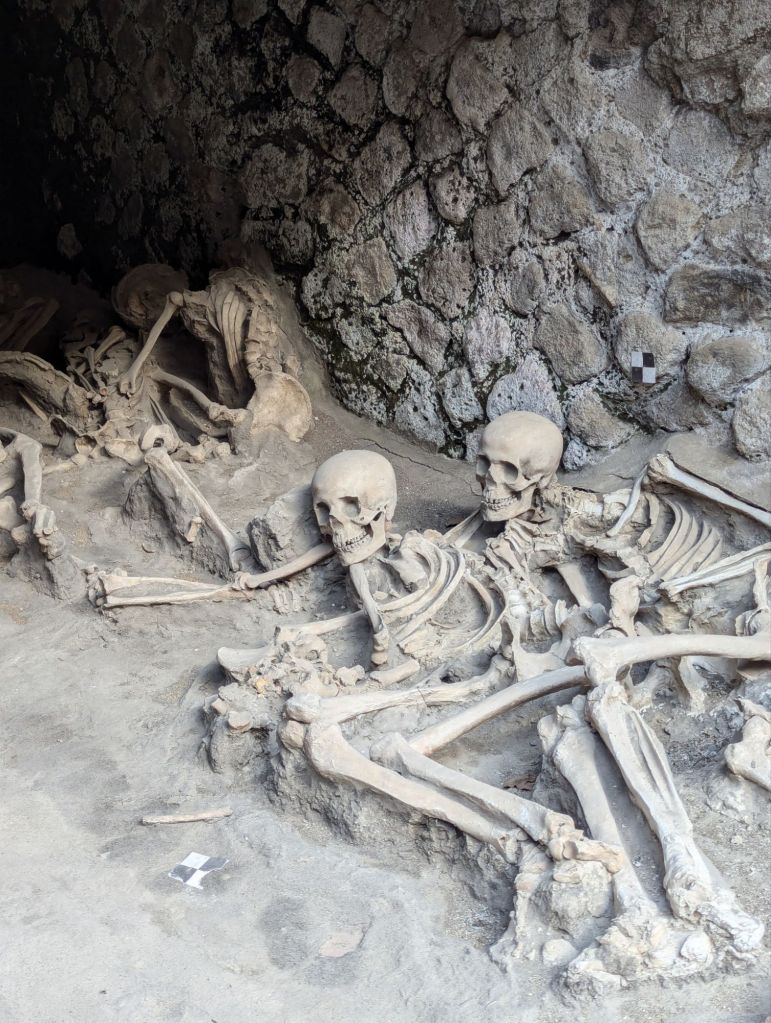
Skeleton at Herculaneum
Most assumed that the city of Herculaneum was completely evacuated prior to the eruptio, but in 1980 archaeologists discovered hundreds of skeletons in boat houses. Several of the skeletons are seen holding each other as the mixture of ash and hot gas buried in the city.
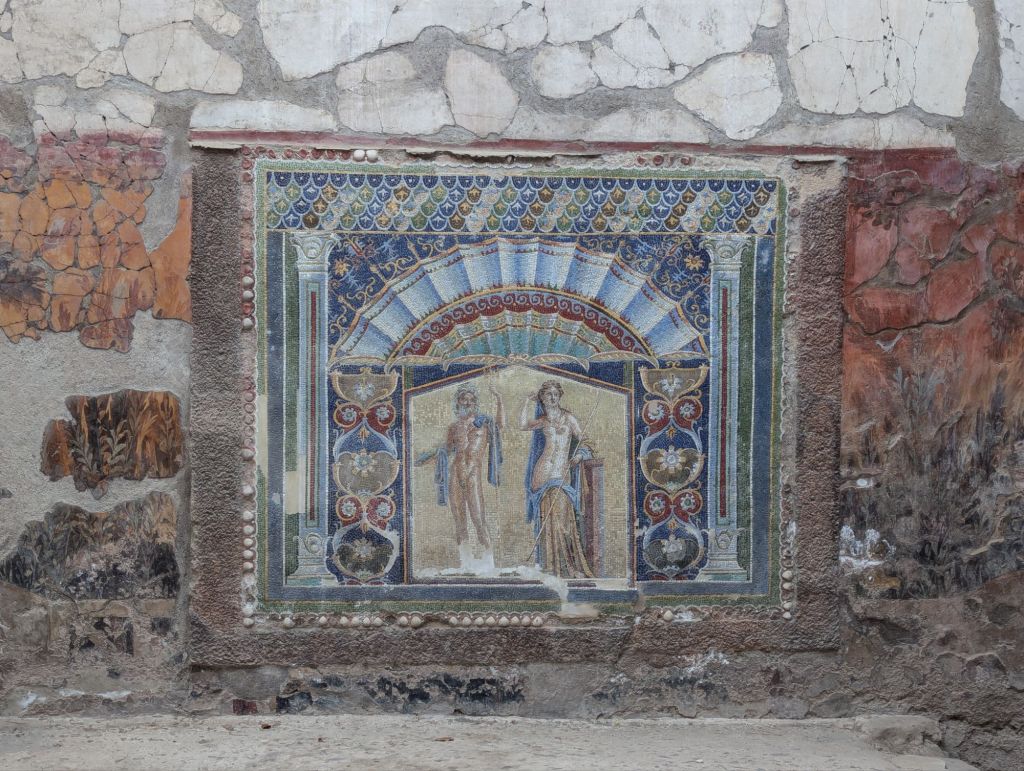
Neptune and Amphitrite
One of the most impressive pieces of art in Herculaneum, Neptune and Amphitrite Mosaic
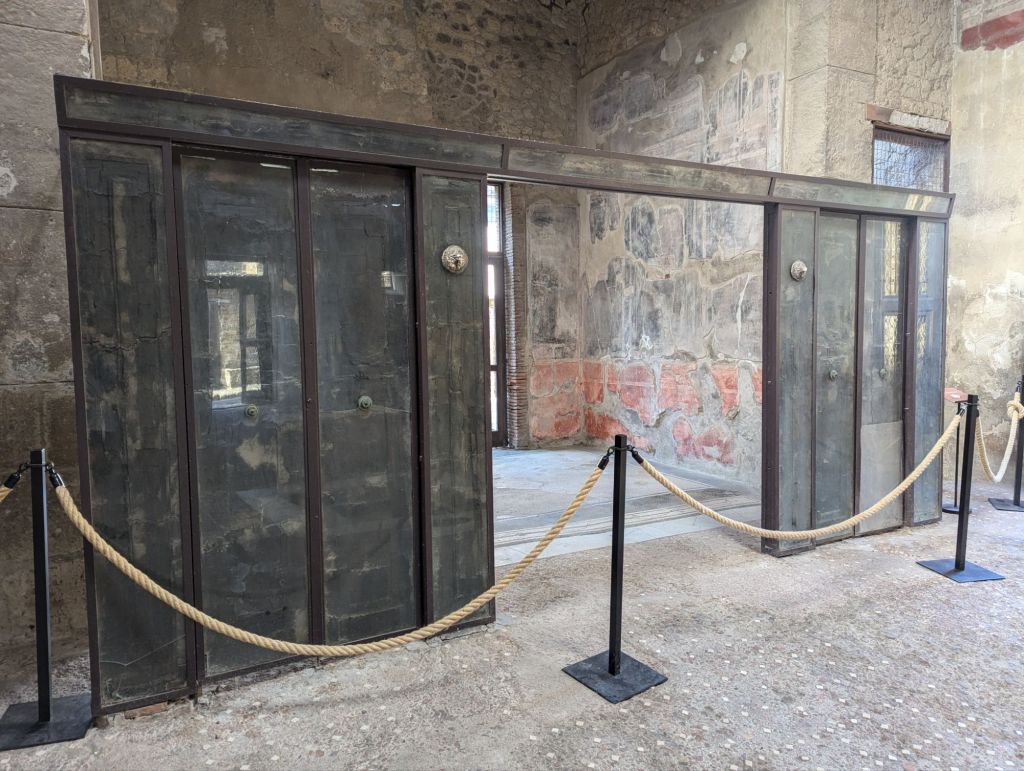
Carbonized wood doors.
What makes Herculaneum unique from Pompeii is the amount of carbonized wood. These are two sliding wood doors found in a wealthy home.
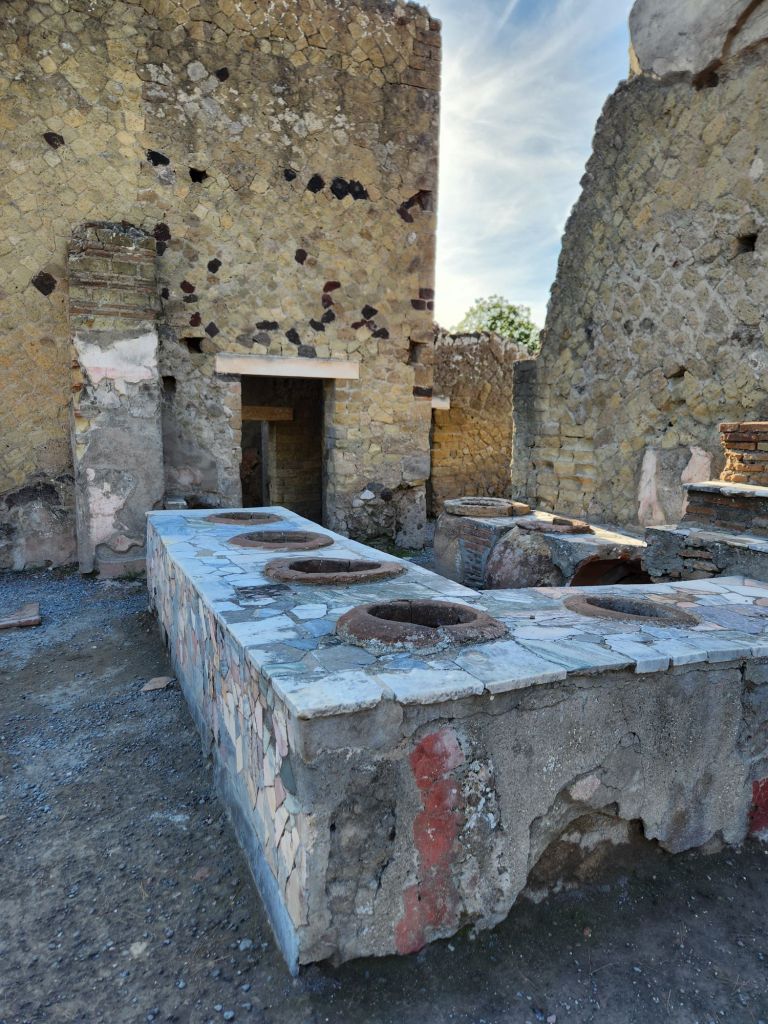
Hot snack bar
Hot snack bar. Food was cooked in pots set inside these holes with a fire below.

The next day we walked over to Pompeii. We were overwhelmed by the size of the site and the amount of tourists (2.5 million annually). Ancient Pompeii was a city of around 10-20K people when it was buried in 79 AD. Pompeii is filled with luxurious houses, over 100 small snack-bars, 31 bakeries, a theater and colosseum. Pompeii excavation started in the mid 1800s.
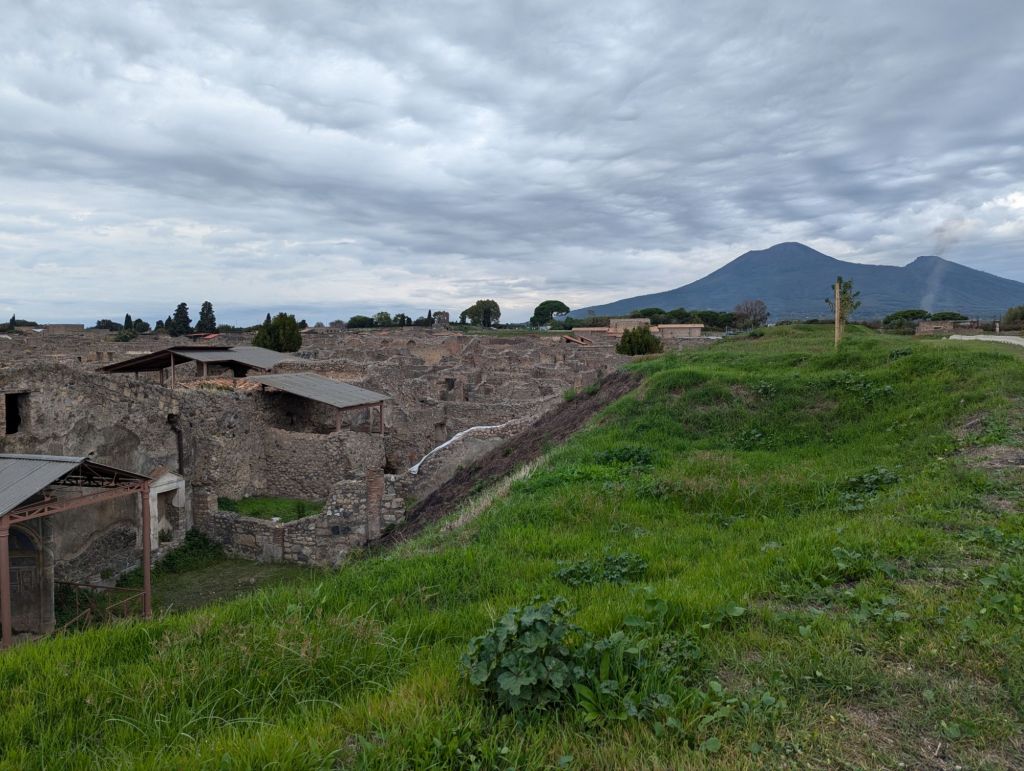
Pompeii with my Vesuvius
I learned that archeologists are still excavating to this day, and you can watch them as they do it (photos weren’t allowed). Much of the city is still buried. On the right of this picture, you can see where it is not yet excavated. Notice Mt Vesuvius looming in the background.
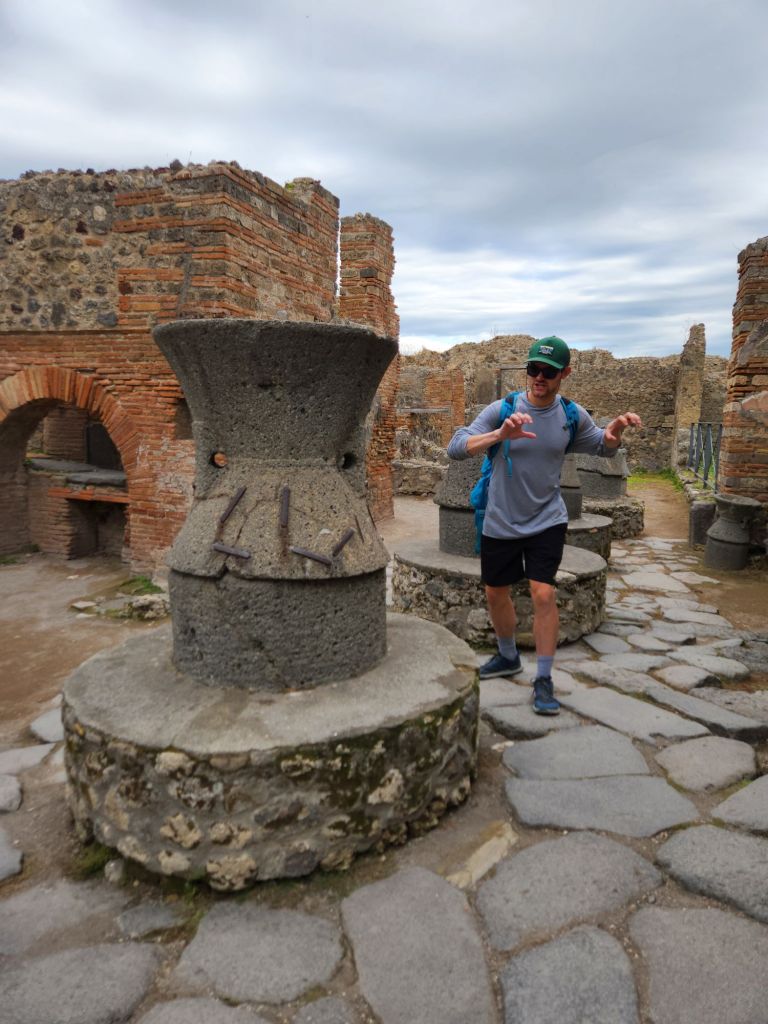
JD demonstrating milling grain
This was a grain milling business. The grain would be poured into the top funnel and the whole hour glass shaped stone would be rotated on the bottom conical stone with a wood lever as I am demonstrating.
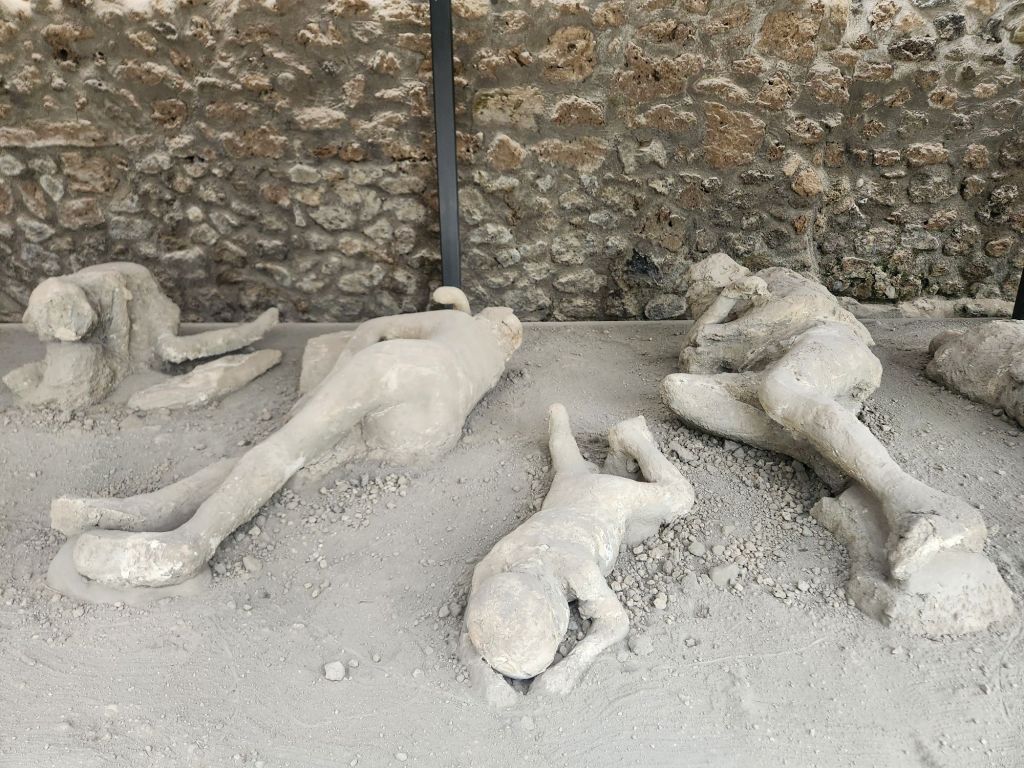
Casts of bodies found in the Garden of Fugitives
Casts of bodies found in the Garden of Fugitives. These people were found trying to escape a vineyard running on 11′ of ash that had already been deposited.
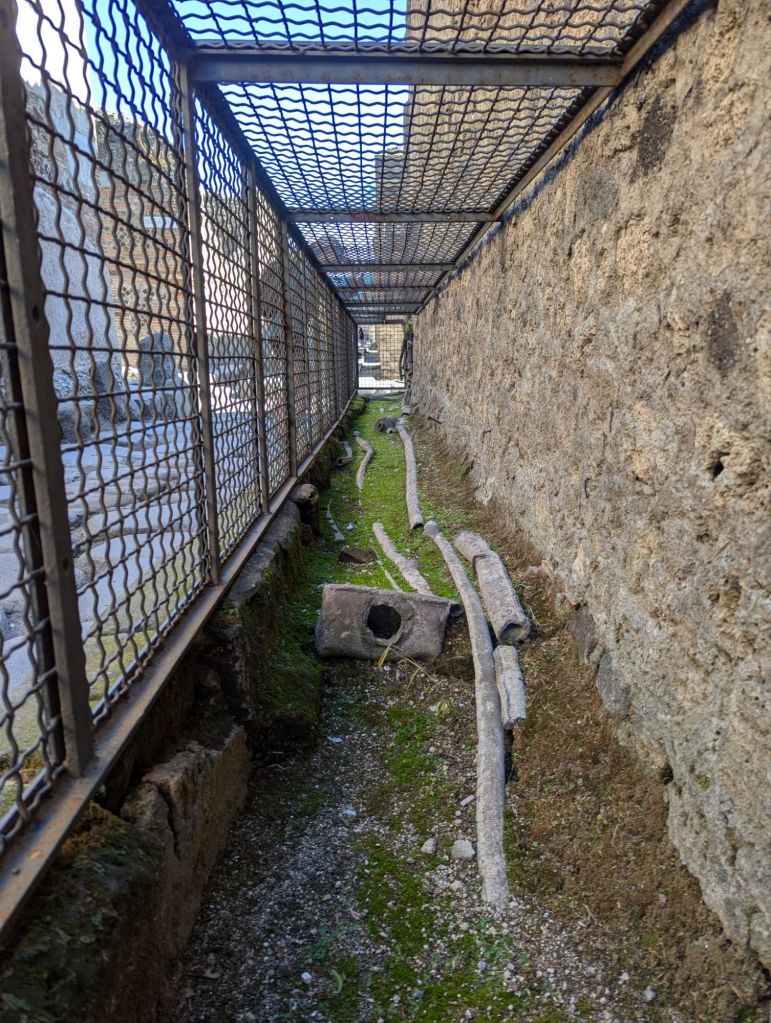
Roman plumbing
I thought this ancient plumbing was cool
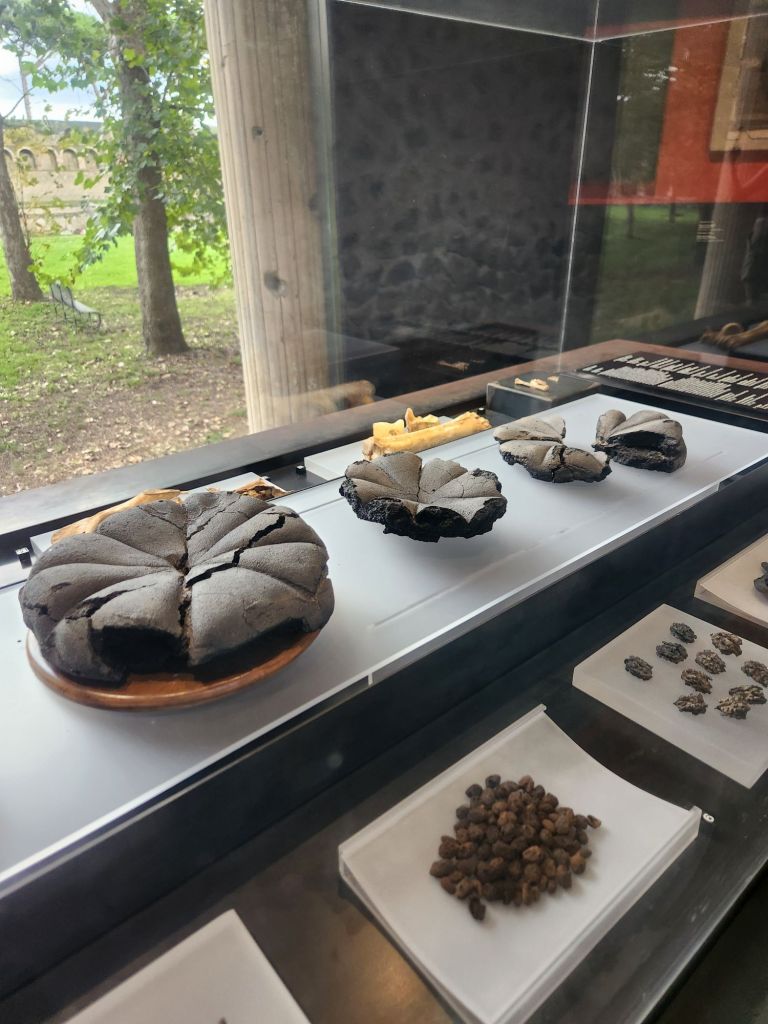
Carbonized bread
The bread was a bit over baked.
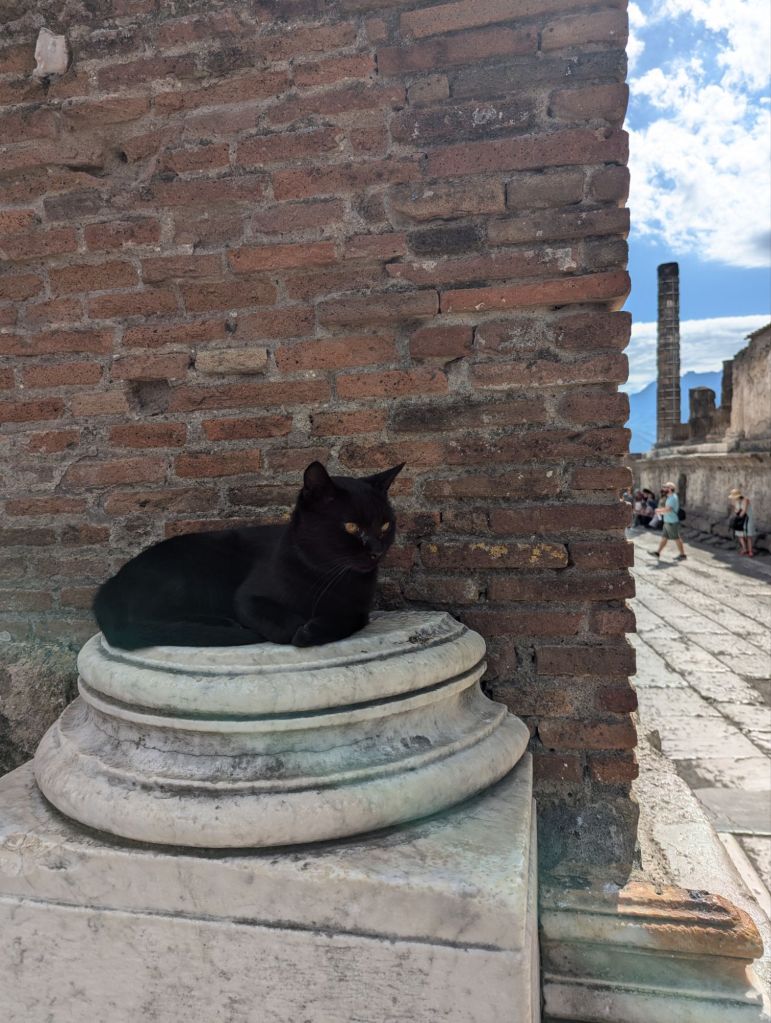
Black cat
Molly befriended a bunch of cats in Pompeii.

Pompeii was really cool to get a glimpse of what Roman life was like. However, we found the city hard to navigate and the free map and information provided was insufficient. Like Rome, they almost force you to hire a tour guide or buy a walking tour in addition to the entrance fee. Luckily, I bought a walking tour app on my phone that we have been using all over Europe that included a Pompeii tour.

Leave a comment